Breast Cancer
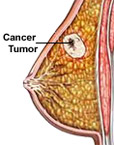 Sometimes
abnormal cells develop in the breast tissue, forming a lump or tumor. This is
the most common type of cancer in women.
Sometimes
abnormal cells develop in the breast tissue, forming a lump or tumor. This is
the most common type of cancer in women.
The
breast has several lobes, which are divided
into lobules and end in the milk glands. Tiny ducts run from the many tiny glands,
connect together, and end in the nipple. Any tissue in the breast can be affected
and it will destroy the nearby tissues also. Usually the cancer arises
from tissue that forms milk ducts. There are at least 15 different kinds,
depending on the site of development . Both women and men can develop
breast cancer, but it is very rare in men.
Breast cancer occurs more commonly in the left
breast than the right and more commonly in the outer upper quadrant. The tumor
may distort the shape of the breast or the texture of the skin as it becomes
larger. It can be detected when it grow large enough to either be felt or seen
on a mammogram.
The cancer cells spread through the specialised
channels in the breast called lymphatics to the lymph nodes to form tumors. It
also spread or metasize to the other parts of the body through the blood stream.
It spreads through the right side of the heart to the lungs, and eventually to
the other breasts, the chest wall, liver, bone and brain. Spreading of the tumor
to other parts of the body can cause death.
Breast cancer can be classified by histologic
appearance and location of the lesion.
-
Adenocarcinoma - arising from the epithelium.
-
Intraductal - developing within the ducts
-
Infiltrating - Occurring in parenchyma of the
breast.
-
Inflammatory - reflecting rapid tumor growth, in
which the overlying skin become edematous, inflamed and in-durated.
-
Lobular carcinoma in situ - reflecting tumor
growth involving lobes of glandular tissue.
-
Medullary or circumscribed - large tumor with rapid
growth rate.
Note : All statements given are only for information purpose. We are not responsible or liable for any problems related to the utilization of information on this site. We suggest that you consult a qualified doctor before trying any alternative health care remedies.



