Health »
Disease & Conditions »
Calorie » Calories to gain / lose weight
Calorie needs to Lose/gain weight
 Having more calories from food, than you
need to maintain your weight can lead to obesity. If food is consumed in excess
of requirements, the excess is converted into fat and stored in the adipose tissues.
Normally adipose tissues constitutes about 10 to 15% of the body weight. In obese
people, it increases upto 30%.
Having more calories from food, than you
need to maintain your weight can lead to obesity. If food is consumed in excess
of requirements, the excess is converted into fat and stored in the adipose tissues.
Normally adipose tissues constitutes about 10 to 15% of the body weight. In obese
people, it increases upto 30%.
One can assess if one is over weight,
by knowing your required body weight and estimation
of the total body fat. If your body weight is 40- 50 % in excess of the required
weight you are severely obese. Your total body fat should be less and no more
than 30% of the overall diet and about 50% of that fat itself should be vegetable
oils rich in Essential fatty acids (EFA). Obesity can lead to several
complications - metabolic disorders such as Diabetes, atherosclerosis, cardiac
disorders; low life expectancy, physical disability etc.
In
order to loose weight you need to reduce your calorie intake but only slightly
below your maintenance level. Alternatively, You can keep your calorie -
intake the usual and increase your activity level. You can raise your metabolic
rate (the basic rate at which you burn calories) by increasing your exercise.
So if you want to lose fat, maintain your energy level and improve health, get
active and take regular exercise. Aerobic exercise burns a lot of calories.
Exercise combined with eating fewer calories promotes weight loss.
A reducing
diet should normally provide only about half the daily calorie requirements. But
remember that a minimum amount of at least 1200 calories of nutritious food is
needed for an adult. Fewer than that would lower iron level and actually slow
down metabolism. The goal is to get maximum nutrition with minimum calories.
So increase your intake of low calorie, health enhancing fresh fruits, vegetables,
whole grains, beans etc and avoid excessive and frequent eating of foods rich
in calories and poor in nutrients like fried and fatty foods, sweets and
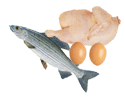
nuts. Eat fish and poultry instead of red meat, limit your egg intake to
four per week, include adequate fiber in your diet. Use unsaturated oils such
as corn, sunflower, safflower etc as the cooking medium and cut down on your overall
salt intake. Take a multivitamin tablet along with your reduced diet
The
rule should be to maintain your body weight constant at the normal level by adjusting
the calorie intake. Here is the distribution of food stuff in two calorie reducing
diets.
| Calorie Reducing Diets |
| Food /day |
1100 K Calories | 1300K
Calories |
| (Vegetarian) |
(Non-
Vegetarian) |
(Vegetarian) |
(Non- Vegetarian) |
| Cereals |
80g |
80g |
100g |
100g |
| Legumes |
50g |
50g |
60g | 60g |
| Skim milk |
1000 |
500 |
1000 | 500 |
| Cheese |
50g |
- |
50g | - |
| Eggs |
- |
One |
- | One |
| Meat and Fish |
|
100g |
- | 100g |
| Green Leafy Vegetables |
200g |
200g |
200g | 200g |
| Other Vegetables |
200g |
200g | 200g |
200g |
| Roots and Tubers |
50g |
50g | 50g |
50g |
| Fruits |
50g |
50g | 50g |
50g |
| Fats and Oils |
15g |
15g | 20g |
20g |
| Cane Sugar |
15g |
15g | 20g |
20g |
| Multivitamin tablet |
one |
one | one |
one |
Similarly, in order to gain weight, You should increase
your calorie intake above your weight maintenance level. To gain body weight,
you must consume more calories than you burn.
| Viewer's Comment |
| Thayba, Trivandram 22/2/2015 |
| › |
Its very useful for me. Thank you.. |
|
|
|
| Vignesh, KIanchipuram 14/2/2012 |
| › |
Thanks for the information above the diet control. |
|
|
|
Questions of
Questions & Answers |
|
| 1. |
Posted on :
28.10.2015 By : vivek , Navi Mumbai
|
View Answer (1)
|
Post Answer
|
|
| |
I m 21 years olg i m gymaholic my wet is 69 kg, per day how much protein i need for lean muscle gain? |
|
|
| A1: |
Hi ,
Per day 8 grams of Protein you need to eat .
Here we are offering some protein products for weight gain and muscle buildup .
for more details Visit:www.lactonovasport.com |
| |
Posted By :Lactonovasport , #81-3, IDA Mallapur,Hyderabad, Telangana-500076. | On 31.7.2020 |
|
|
|
|
| 2. |
Posted on :
3.2.2015 By : Ramji , Hyderabad
|
View Answer (1)
|
Post Answer
|
|
| |
I am 77trs had cabag 15 years ago my blood sugar 90/118 take anti diabetics regularly do 2 km of cycling on cardi cycle my hbagvaries from 6.5to7 my wt is 67kgs please prescribe Diet sheet for me. |
|
|
| A1: |
My weight is 70kg and my height is 5 ft so which food i will use to reduced weight,Kindly assist me I will very much appreciate.
Thanks.
Khyati |
| |
Posted By :khyati dave , Nairobi | On 23.6.2017 |
|
|
|
|
| 3. |
Posted on :
6.5.2014 By : Shashi Borah , Assam
|
View Answer (1)
|
Post Answer
|
|
| |
I am a 26 years old and 5'6" feet indian man my weight is 76 kg. I want to loss my weight. Please give me suggestions.
|
|
|
|
|
|
|
| » more... |
Note : All statements given are only for information purpose. We are not responsible or liable for any problems related to the utilization of information on this site. We suggest that you consult a qualified doctor before trying any alternative health care remedies.



