Based on different styles of narrative singing, rhythms of dancing, foot
work and make-up of the dancer, three varieties of Thullal were evolved
in course of time. They are: 1. Ottan Thullal
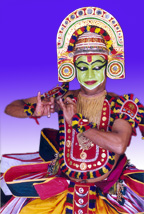 This
style consists of a variety of rapid metres well suited for amusing narratives
and is vigorous in execution. The Thullal artist who represents this type
has a fascinating costume. His face is painted green. With a round headgear
of multi-coloured tinsel and gold, a breast plate to match, a circlet
of jingles round his ankles and wearing a frilled skirt round his waist,
he sings and dances to the sounding of the cymbals and beating of the
drum. Along with singing and dancing, the player acts the incidents narrated
in the songs. Ottan thullal usually represents Mahavishnu. This
style consists of a variety of rapid metres well suited for amusing narratives
and is vigorous in execution. The Thullal artist who represents this type
has a fascinating costume. His face is painted green. With a round headgear
of multi-coloured tinsel and gold, a breast plate to match, a circlet
of jingles round his ankles and wearing a frilled skirt round his waist,
he sings and dances to the sounding of the cymbals and beating of the
drum. Along with singing and dancing, the player acts the incidents narrated
in the songs. Ottan thullal usually represents Mahavishnu.
2. Seethankan Thullal
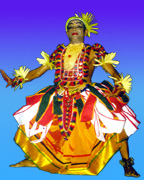 It has metres of medium cadence for the songs used and
rhythm to suit. In contrast to the picturesque appearance of the dancer
in Ottam Thullal, the dancer in Seethankam Thullal has his face unpainted,
except for a few black lines, on the eyebrows and eyelids to heighten
the expression of the eyes. He wears a crown made out of the tender leaves
of coconut palm, with frills of the same material adorning his wrists.
It has metres of medium cadence for the songs used and
rhythm to suit. In contrast to the picturesque appearance of the dancer
in Ottam Thullal, the dancer in Seethankam Thullal has his face unpainted,
except for a few black lines, on the eyebrows and eyelids to heighten
the expression of the eyes. He wears a crown made out of the tender leaves
of coconut palm, with frills of the same material adorning his wrists.
3.Parayan Thullal
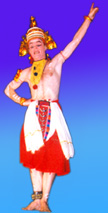 This has a slow narrative style for singing, with slow
graceful elegant steps, movements and hand gestures. The make-up of a
Parayan is very simple except for an ornamental headgear with a serpent
hood and a red cloth round his waist. The dancer smears the body with
charcoal paste and wears ghungru (circlet of bells) only on one leg.
This has a slow narrative style for singing, with slow
graceful elegant steps, movements and hand gestures. The make-up of a
Parayan is very simple except for an ornamental headgear with a serpent
hood and a red cloth round his waist. The dancer smears the body with
charcoal paste and wears ghungru (circlet of bells) only on one leg.
|



