|
|

Tuesday, June 9, 2026
|
|


Salabha Asana is a reverse posture
to the Cobra Posture, which gives a backward 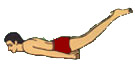 bend to the
spine. Values of certain asanas are maximised when done one after the other.
Cobra posture activates the upper area while locust activates the lower waist
down area of the body. So this asana gives maximum benefit when done after the
cobra posture.
bend to the
spine. Values of certain asanas are maximised when done one after the other.
Cobra posture activates the upper area while locust activates the lower waist
down area of the body. So this asana gives maximum benefit when done after the
cobra posture.
Since full-locust is strenuous, it is better for the beginners to practice the half-locust posture before attempting the full-locust.
Full Locust Posture
How to do :
Restrictions :
Start with three rounds on the first day. Do not practice more than four rounds. While doing the asana special attention should be given for keeping the legs tight. Do not bend or fold on the knees. In the initial stage, do not try to retain in the same position excessively. Relax for about 6 10 8 seconds between each round. For the beginners, it is always better to practice the half-locust posture before attempting the full-locust. When you first attempt the locust, you may be disappointed to find that your feet rise only slightly from the floor. Do not be discouraged. This will improve rapidly with practice.
Watch Video on how to do Half Locust Posture
Half - Locust Posture
For the half locust, the position, the breathing and the body conditioning are as same as the full-locust. The only difference is that you lift one leg up at a time. Lift legs alternatively. Do not twist the hips or bend the knee. Repeat lifting 2-4 times each.
Benefits : The locust brings flexibility to the cervical (upper back) region and strength to the lower back. Brings a rich blood supply to the spine and the whole upper area. Favourably activates the kidneys, liver and all the organs of the lower part of the body. Increases abdominal pressure, regulating intestinal function and strengthening the abdominal walls and relieves back pain.
Watch Video on how to do Locust Posture
Disclaimer : We are not responsible or liable for any injury or harm caused to the practitioner while practicing the asanas given here. Some asanas may be inappropriate under certain medical conditions. We suggest that you consult a qualified instructor.


