BISMILLAH KHAN
Shehnai player
Ustad
Bismillah Khan - the legendary maestro who transformed the Shehnai
(a type of wind instrument)
from an instrument only used in marriage ceremonies to an honoured position in
the classical pantheon - exemplified a performer who believed musicians are
supposed to be heard and not seen.
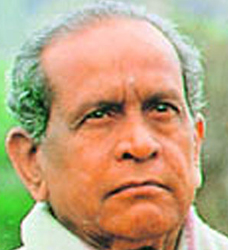 Born as the second son
to parents Paigambar Khan and Mitthan
on March 21, 1916, Khan was
christened as Qamaruddin initially, before his grandfather uttered Bismillah
after looking at the newborn. He was born into a family of court musicians in the princely state of Dumraon in
Bihar, Bismillah's father was a court musician employed in the Dumrao palace by the
Raja of Bhojpur. His great grandfather Hussain Baksh and his grandfather,
Rasool Bux Khan were the Shehnai-nawaz of the Bhojpur King's court.
Born as the second son
to parents Paigambar Khan and Mitthan
on March 21, 1916, Khan was
christened as Qamaruddin initially, before his grandfather uttered Bismillah
after looking at the newborn. He was born into a family of court musicians in the princely state of Dumraon in
Bihar, Bismillah's father was a court musician employed in the Dumrao palace by the
Raja of Bhojpur. His great grandfather Hussain Baksh and his grandfather,
Rasool Bux Khan were the Shehnai-nawaz of the Bhojpur King's court.
At the age of three when his mother took him to his maternal uncle's house in
Banaras, Bismillah was fascinated watching his uncle practice the shehnai.
The
little child's reaction astonished his uncle who predicted that the boy would
one day become a great player of the instrument. Later, Bismillah Khan was trained and apprenticed by
this uncle, the late Ali
Bux 'Vilayatu', a Shehnai player attached to Varanasi's Vishwanath Temple. He
also appeared as his uncle's accompanist at several music conferences in the1930s
till his uncles death in 1940.
At the age of 14 (1930), Bismillah accompanied his
uncle to the Allahabad Music Conference. This was his first opportunity to
reproduce the composition of 'bandash' and his skill was greatly appreciated.
Bismillah familiarized himself with various forms of music of UP,
such as Thumri, Chaiti, Kajri, Sawani etc. Later he studied Khayal music and
mastered a large number of ragas. He brought the shehnai to the center stage of Indian
music with his concert at the Calcutta All India Music
Conference in 1937.
With the opening of the All India Radio in Lucknow in 1938
came Bismillah's big break. He soon became an often-heard Shehnai player on
radio. His greatest moment came, when India gained Independence on August
15,1947 and he became the
first Indian to greet the nation with his Shehnai. He played to an audience,
which included Mahatma Gandhi and Jawaharlal Nehru, who later gave his famous
'Tryst with Destiny' speech. The maestro again came into the limelight when he
performed Raga Kafi from Red Fort on India’s first Republic Day ceremony.
There upon, the plaintive strains of his Shehnai used to mark the Republic Day
celebrations for generations of Indians.
His first trip
abroad was to Afghanistan where King Zahir Shah was so taken in by his
performance that he gifted him priceless Persian carpets and other souvenirs. He also
performed in Europe, Iran, Iraq, Canada, West
Africa, USA, USSR, Japan, Hong Kong and almost every capital
city of the world.
Khan has been conferred with innumerable awards,
including coveted awards by the Government of India, which include 'Bharat Ratna'
in 2001, second 'Rajiv Gandhi National
Sadbhavana
Award' in 1994, 'Padma Vibhushan' in 1980, 'Padma Bhushan' in 1968 and 'Padmashri' in
1961. He has also been awarded
the Sangeet Natak Academy Award and the Tansen Award of the Madhya Pradesh
government.
Bismillah Khan acquired honorary doctorates from the Banaras Hindu
University and the Visva Bharati University, Santiniketan. Bismillah Khan is also the first Indian who was
invited to perform at the prestigious Lincoln Center Hall in the USA.
He has acted in one Hindi film, 'Jalsaghar',
a movie by Satyajit
Ray. He also worked with Lata Mangeshkar's
rendering of the title song "Mere sur aur tere geet" for the film 'Goonj
Uthi Shehani', and for the song 'Ye Jo Des Hai Tera' in a Hindi movie Swades
(2004). He has recorded duets with
Vilayat Khan on the sitar, Prof. V.G. Jog on the violin as well as with N.Rajam, an exceptional violinist trained in Hindustani music
by Omkar Nath Thakur, and Shahid Parvez a young sitarist of uncommon
sensitivity.
A pious Shia Muslim and also a
devotee of Mother Saraswati, Khan was one of the finest musicians in
post-independent Indian Classical music and one of the best examples of Hindu Muslim
unity in India. He was often seen playing at various temples and on the banks of the holy
river Ganges in the northern Indian city of Varanasi, his home town.
Khan who led a simple, unostentatious life in the manner of a Sufi carried the honorific of an
'ustad' (guru)- never owned a car, and liked to travel around Varanasi in a bicycle
rickshaw. The great maestro who introduced 'Shehnai' to a global
audience died of heart failure at the age of 90 on August 21, 2006. He is survived by five sons, three daughters and a large number of
grandchildren and great grandchildren.



