|
|

Sunday, July 19, 2026
|
|


Our Brain
The
brain together with the spinal cord, constitutes the nerves system and controls
ever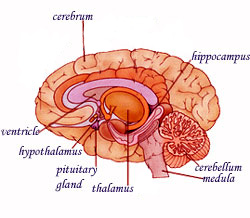 thing
we do, and every thought we have. The brain works all the time. It is responsible
for monitoring and regulating unconscious and voluntary actions in the body.
It is also the intellectual centre that allows thought, learning, memory and creativity.
The spinal cord is a thick bunch of nerves running from the brain down the
spine. Branching off from it, is a complex network of nerves that runs to every
part of body which carry signals to the rest of the body and back to the brain,
from inside and outside the body. The information from outside is gathered
by our five senses, sight, hearing, smell, taste and touch.
thing
we do, and every thought we have. The brain works all the time. It is responsible
for monitoring and regulating unconscious and voluntary actions in the body.
It is also the intellectual centre that allows thought, learning, memory and creativity.
The spinal cord is a thick bunch of nerves running from the brain down the
spine. Branching off from it, is a complex network of nerves that runs to every
part of body which carry signals to the rest of the body and back to the brain,
from inside and outside the body. The information from outside is gathered
by our five senses, sight, hearing, smell, taste and touch.
Effects
of Aging
Two thirds of all people eventually experience
some significant loss of mental lucidity and independence as a result of
aging. 60 years and older experience significant cognitive decline, including
declines in memory, concentration, clarity of thought, focus and judgment with
an increase in the onset of several neurological problems like Alzheimer's disease,
Parkinson's disease, stroke etc
Physically what
happens to our brain as years go by....
Research has
shown that as brain ages or as people get older, there will be a decrease in brain
weight and brain volume, widening of the grooves on the surface of the brain and
enlargement of the ventricular system (ventricles- a cavity or hollow part of
the brain).
The decrease in brain weight and brain volume are probably due to loss of neurons (specialized cells transmitting nerve impulses) and extra cellular fluid. Man may have a 20% reduction in brain weight between the ages of forty -five and eighty -five and lose thirty to fifty thousand neurons a day from the brain and nervous system as they age. Enlargement of the ventricular system may be probably due to loss of cells surrounding the ventricles (the spaces in the brain that contain cerebrospinal fluid).
Probable
reasons for the change...
Surprisingly there is a certain
percentage of people who function very normally even when they age. So the causes
of loss of memory, concentration, focus and the inability to function independently
as man ages may not be only due to the aging itself as previously thought. But
may be due to a combination of other factors like Brain-unhealthy behavior and
habits, insufficient mental stimulation, limited thought or response control strategies,
brain unhealthy diet or inadequate supplements, lack of novel experience, lack
of sufficient social interactions and cooperation etc.
Ways
to delay effects of aging...
To stay mentally sharp,
you need to work your mental muscles each and every day. Get involved in something
that keeps your brain busy such as taking up a new class, exercise, martial arts,
mind games etc. Any activity that involves concentration will help exercise the
mind and keep it strong.
Mental stimulation
After
40, taking up a new language or any new course or art classes, whether joining
a formal class or learning on your own is beneficial. As long as you learn something
new, the nerve cells in your brain will grow and the connection between them will
continue to strengthen.
As you age, find time to take up any art lessons like painting, wood working etc. that you always wanted to pursue but never had the time earlier. These help strengthen the part of the brain that controls spatial relations, the ability to recognize how things piece together.
To sharpen the hand -eye coordination and reaction time reflex, getting involved in some sports like table tennis, badminton etc. or playing any music instruments and video games in the computer helps.
Get knowledge from books and try to keep remembering them to enhance your memory. Regular reading of a variety of news papers is also helpful. Keep your brain active and sharp by playing like chess, cards, scrabble and doing crossword puzzle, jigsaw puzzles etc.
Diet and supplements
A
deficiency in vitamin B-6, B-12 or folate (folic acid) can result
in certain anemia and deterioration of the nervous system causing memory loss.
So a diet high in Vitamin B-6, B-12 and Folate is essential especially after
40s. Natural sources of B-6 include beans, pulses and B-12 include seafood, meat,
and dairy products. Folate is found in spinach, asparagus, beans, and fortified
cereals.
Vitamin E, an antioxidant comprises several compounds that are essential for the maintenance of cell membranes. The main sources of vitamin E are cereal, grains, green vegetables and eggs. Recent research has proved that antioxidant compounds like alphalipoic acid and acetyl -L-carnitine will boost memory. Taking small doses of ginkgo biloba a potentially safe and inexpensive herb, is shown to improve blood flow to the brain as well as other organs.
For individuals who cannot or do not consume an adequate variety of foods, a multivitamin/multi-mineral supplement may be beneficial. Along with the multivitamin/mineral supplement, 400 IU of Vitamin E , 100-500 mg of Vitamin C and 500 mg of Calcium (for people under 50 years) or 1000 mg (for people over 50 years) would be beneficial.
Social
Interactions
Having a network of connections to other
people is beneficial for brain health and well-being. Humans appear to benefit
and function more optimally when connected to other humans in a socially organized
network. It is seen that people with a strong support network of family, friends,
and acquaintances are less susceptible to stress-related problems.
Exercise
| Keeping your body fit also keeps your mind fit. Practicing yoga, long term aerobic exercise or martial arts regularly during middle age is beneficial for boosting the brain. Standing on one foot for as long as possible and then switching to the other foot and repeating is a best single exercise which improves motor coordination that can be done at any time and without any special equipment. Try and see whether you can stand for thirty seconds, then slowly for longer periods and so on. |
|
Excess levels of cortisol, a stress hormone, may shrink the hippocampus, a part of the brain that's needed to form certain types of memory. Yoga, meditation and breathing exercises which help to increase the action of the immune system along with socializing (sharing with others) are effective in lessening stress. More on stress management
Recent research suggest that estrogen therapy may improve both verbal and visual memory in postmenopausal women with Alzheimer's. Along with the above factors, avoiding smoking, abuse of drugs, excess alcohol and getting enough sleep goes a long way in keeping your brain healthy and young.
| Viewer's Comment | ||||||
|
||||||
|
||||||
|
||||||
|
||||||
Note : All statements given are only for information purpose. We are not responsible or liable for any problems related to the utilization of information on this site. We suggest that you consult a qualified doctor before trying any alternative health care remedies.
|
|||||||||||||||||||||||||||||||||||||||||


