Kathakali - Character Types
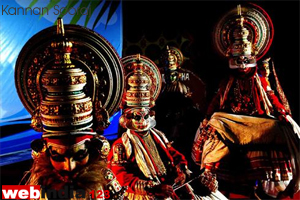 In Kathakali, each actor presents
a particular character type rather than being a narrator as in the other solo
forms.
In Kathakali, each actor presents
a particular character type rather than being a narrator as in the other solo
forms.
There are the demi-Gods or the heroes;
they can be generally identified as the dhirodatta heroes of the Sanskrit drama
or the sattvika characters of the Mahabharata and the Ramayana. Gods also belong
to the category of good characters and Krishna and Rama may be characterized
both as gods and as good heroes. These characters are calm, good-humoured, heroic
and are seen in their moods of grace and of valour but never in fear or disguist.
In their moods of ferocity and anger these basically good types assume what
is known in the tradition as raudra rupa, mood of anger. Thus a character like
Bhima assumes raudra manifestation when in a state of anger which p rompts him
to kill Dussasana.
There are the anti-heroes and the
villains, both human and demon. They represent negative forces and are usually
aggressive, treacherous and ferocious. These also can be traced back to Puranic
stories and their treatment is more akin to characterization in the Mahabharata
rather than that in the Sanskrit drama. Kathakali makes a further subdivision
of villainous types because villains and demons can be either kings, gods or
female demons. They may be simply evil or they may be evil and treacherous and
cruel.
Humorous portions of Kathakali are
occasionally presented in number in which Hanuman appears. Kathakali tradition
also has characters like the half-man half-lion in Narasimha (Prahlada Charitam);
half-man half-bird in Hamsa (Nala Charitam) and the monkey deity Hanuman. There
are a few other characters who cannot justifiably fall into any of the large
categories. These include the ordinary humans such as women, rishis, children,
messengers etc. There are the unique persons who live in woods and forests and
may be stylized types representing tribal peoples and aborigines.



