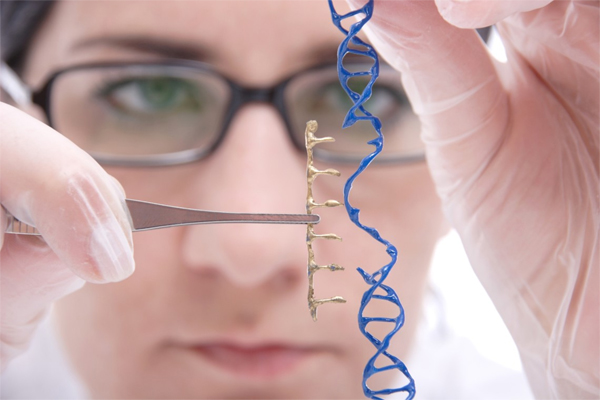
Genetic Engineering (GE) is a highly complicated and advanced branch
of science which involves a wide range of techniques used in changing
the genetic material in the DNA code in a living organism. 'Genetic Engineering'
means the deliberate modification of the characters of an organism by
the manipulation of its genetic material. Genetic engineering comes
under the broad heading of Biotechnology. There is a great scope in this
field as the demand for genetic engineers are growing in India as well
as abroad.
A cell is the smallest living unit, the basic structural and functional
unit of all living matter, whether a plant, an animal, humans or a fungus.
While some organisms are single celled, others like plants, animals,
humans etc are made up of a lot more cells. For eg humans have approximately
3 million cells. A cell is composed of a 'cell membrane' enclosing the
whole cell, many 'organelles' equivalent to the organs in the body and
a 'nucleus' which is the command centre of the cell. Inside the nucleus
are the chromosomes which is the storage place for all genetic (hereditary)
information which determines the nature and characteristics of an organism.
This information is written along the thin thread, called DNA, a nucleic
acid which constitutes the genes (units of heredity). The DNA governs
cell growth and is responsible for the transmission of genetic information
from one generation to the next.
Genetic engineering aims to re-arrange the sequence of DNA in gene using
artificial methods. The work of a genetic engineer involves extracting
the DNA out of one organism, changing it using chemicals or radiation
and subsequently putting it back into the same or a different organism.
For eg: genes and segments of DNA from one species is taken and put
into another species. They also study how traits and characteristics
are transmitted through the generations, and how genetic disorders are
caused. Their research involves researching the causes and discovering
potential cures if any.
Genetic engineering have specialisations related to plants, animals
and human beings. Genetic engineering in plants and animals may be to
improve certain natural characteristics of value, to increase resistance
to disease or damage and to develop new characteristics etc. It is used
to change the colour, size, texture etc of plants otherwise known as
GM (Genetically Modified) foods. GE in humans can be to correct
severe hereditary defects by introducing normal genes into cells in
place of missing or defective ones.